
CASE STUDY · #SKILLS #AI
From a role changing with AI to a network that builds on existing skills and develops new ones


CLIENT
German multinational in the technology and industrial sectors
FOCUS
Skills development
PARTICIPANTS
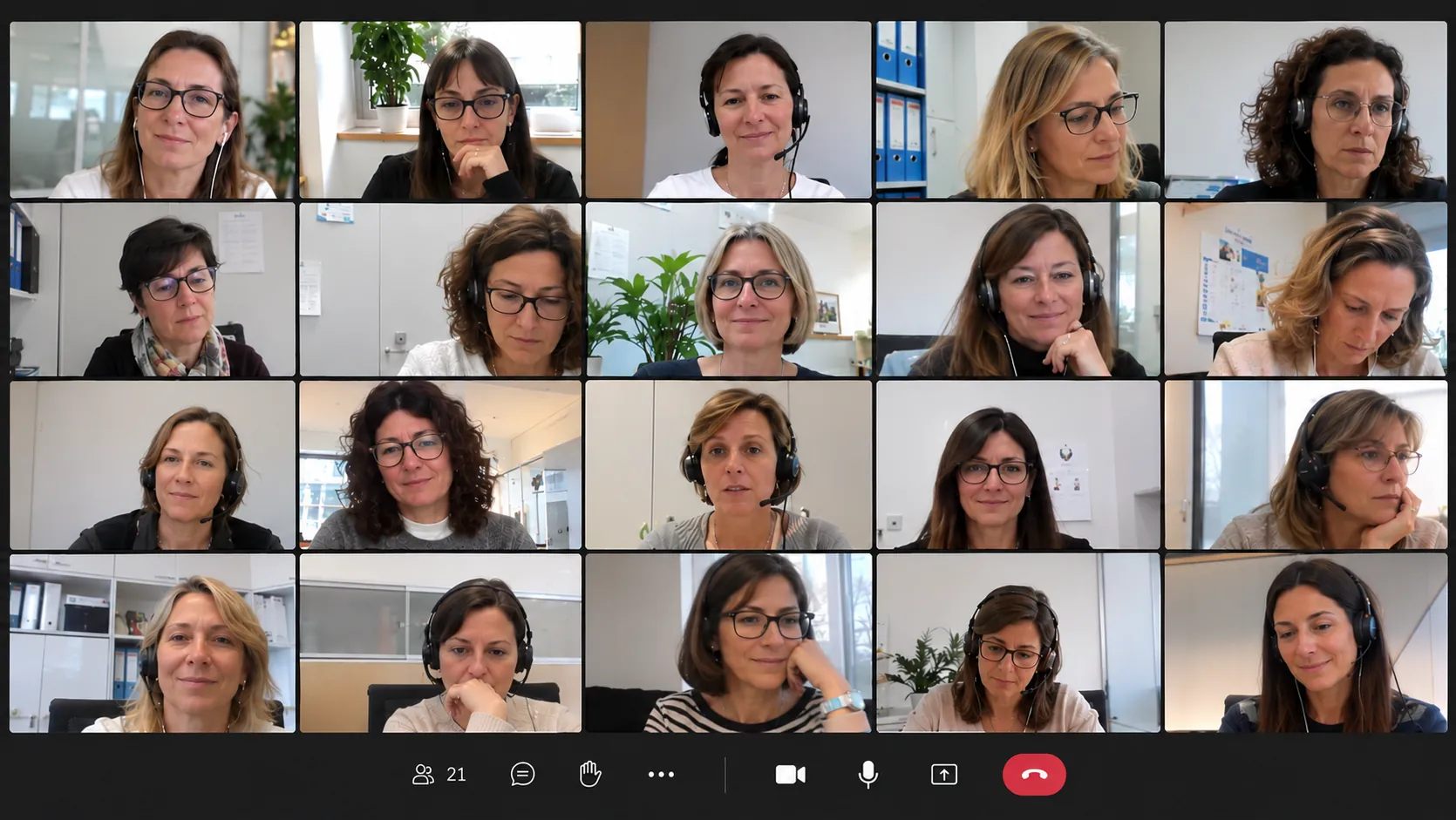
20 assistants based across Italy
Objective
Support the group of assistants in understanding how artificial intelligence and organisational change are reshaping their role. Strengthen their network as a space for collaboration and peer learning, bring existing skills together and identify the new skills needed to navigate change.
Key activities
01
Explore the assistants’ experiences, responsibilities and skills, recognising the differences and complementary strengths across locations and organisational contexts
02
Develop a shared understanding of the role’s identity, the value it creates and the assistants’ contribution to the organisation
03
Examine how artificial intelligence is changing day-to-day tasks, where it could be applied and what skills are needed to respond
04
Redefine the assistant’s role together, identifying the value it creates for the organisation, the objectives used to measure it and the human skills that cannot be delegated to AI
05
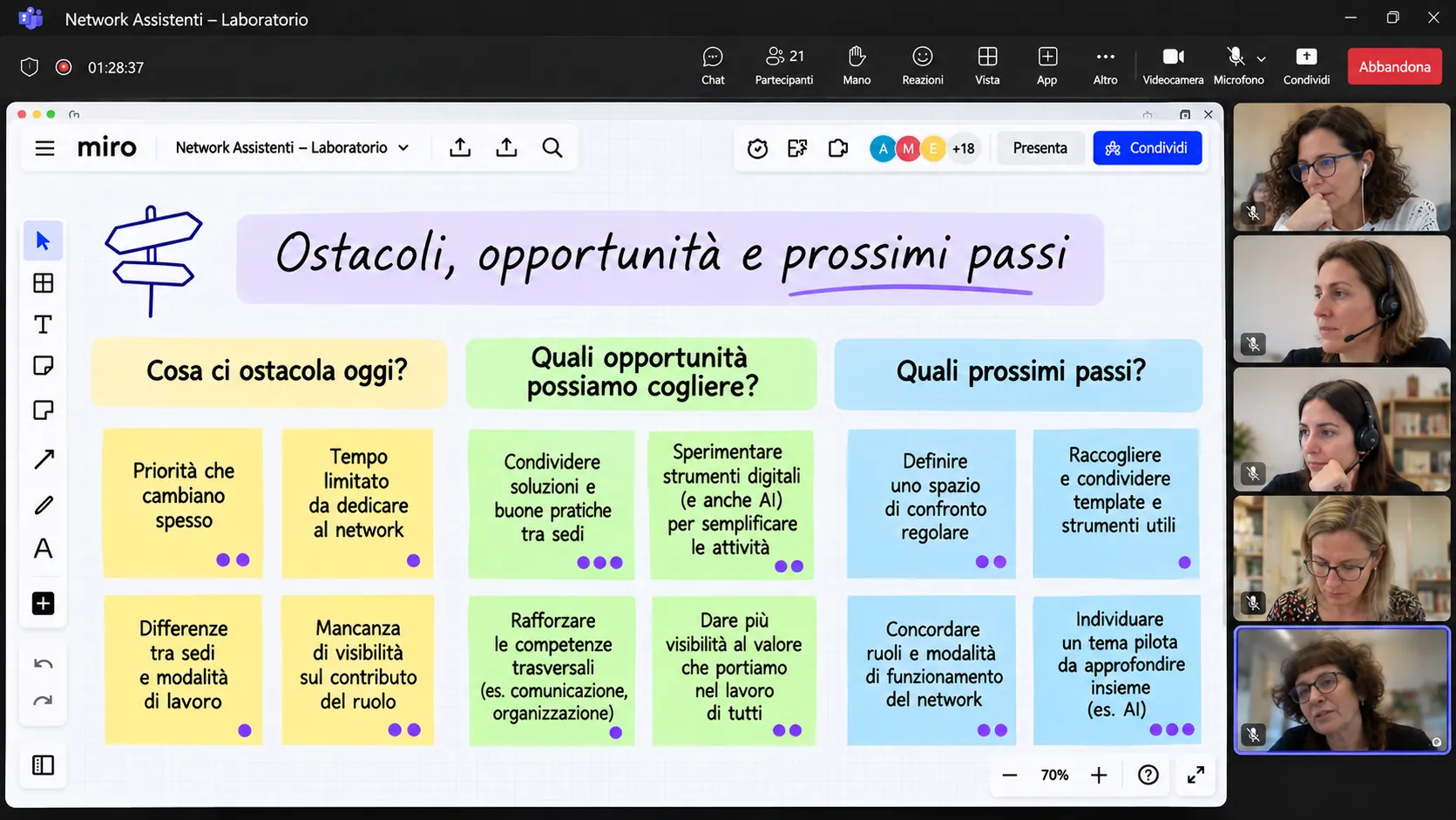
Identify development needs and establish ways to share knowledge and learn from one another, drawing on the resources already available across the network
Results
A shared manifesto setting out the identity and value of the role and making the assistants’ contribution to the organisation explicit
An inventory of existing skills, experiences, knowledge and resources across the network
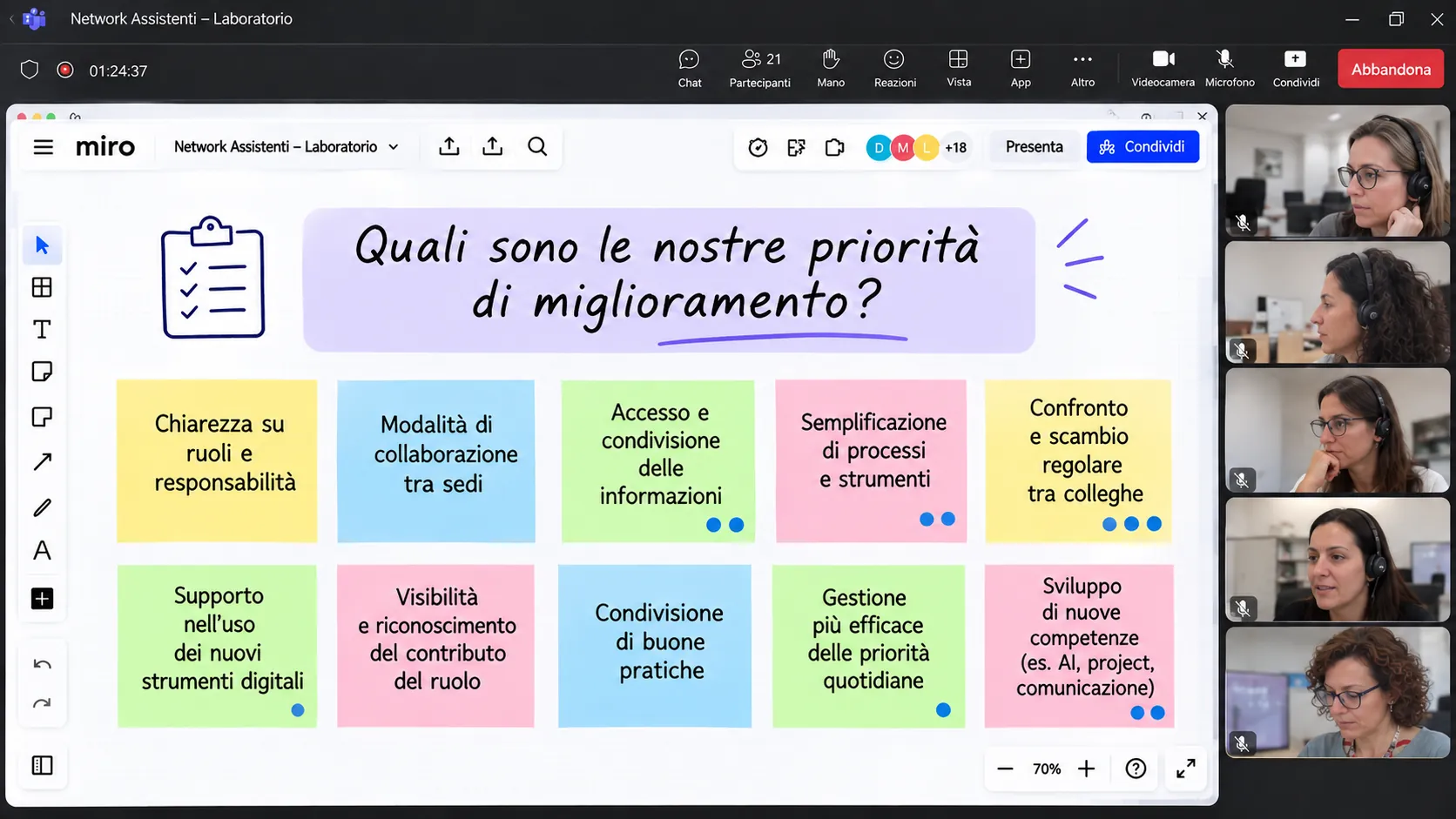
Development needs and priority skills identified in response to organisational change and the introduction of AI
A shared job description defining the value of the role, its objectives, how its contribution will be measured and the human skills that cannot be delegated to AI
Potential applications for AI identified by looking at day-to-day tasks and opportunities for improvement
A skills development pathway combining the use of internal resources, peer learning and the acquisition of new skills
Ways of working established to support ongoing knowledge-sharing among assistants based in different locations
New capabilities
Understand how their role is evolving and anticipate emerging needs, rather than simply reacting to technological and organisational change
Recognise when to draw on existing skills and when to develop new ones, rather than defaulting to external training
Draw on colleagues’ skills to tackle new problems and situations, using the network as a resource for collaboration and peer learning
Distinguish between tasks that can be delegated to AI and those that require human judgement, relational awareness and responsibility
Assess the opportunities and results of AI critically, deciding how to integrate it into day-to-day work while maintaining quality and decision-making autonomy
Take an active role in their professional development by connecting their skills and role objectives to their contribution to the organisation
When AI transforms work, the future of a role depends not only on developing new skills, but also on recognising the value of existing ones, bringing them together and building the collective ability to shape change.
From the workshop
More case studies


Is your organisation facing a similar challenge?
If a case study or article has helped you recognise a dynamic in your organisation, we can start there, explore it and work out how to address it together.