
TALK · WORKSHOP · ETB CAMP 2026
‘We’ve always done it this way’: Roots and Routes
What happens when a way of working that has brought us this far no longer helps us move forward?
ROLE
Design and facilitation
PARTICIPANTS
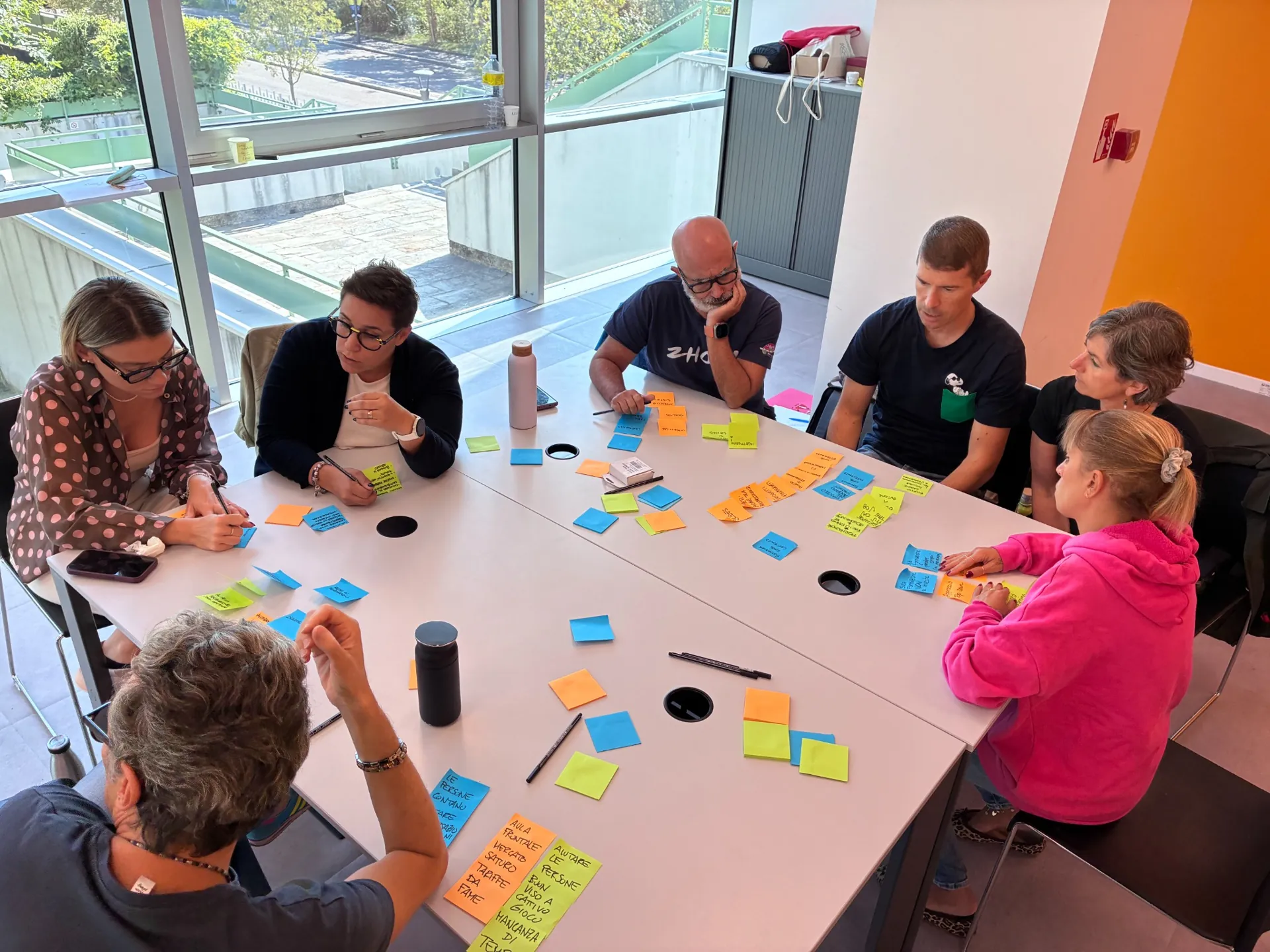
10 trainers and facilitators
DATE AND LOCATION
25–26 September 2026, Milan
ETB Camp 2026
Experiential Training BarCamp is an open-space ‘unconference’ dedicated to experiential learning. In different locations across Italy, trainers and facilitators meet to share methods, try out new workshops and contribute to their development together.
I took part in the Milan edition, which focused on team dynamics and business strategy.
My contribution: ‘We’ve always done it this way’: Roots and Routes
A journey through complexity, charting a course for development across past, present and future.
What happens when a way of working that has brought us this far no longer helps us move forward? Organisations do not keep repeating certain practices simply because people are unwilling to change. Often, it is because those practices have worked: they have delivered results, strengthened skills and helped shape the organisation’s identity.
Over time, however, what once supported success can become a constraint. Decisions lose consistency, processes need ever more workarounds, and the gap grows between the stated direction and what actually happens at work.
At ETB Camp, I designed and facilitated ‘Roots and Routes’, a workshop to help groups and organisations recognise what continues to shape the present and understand what to preserve, what to change and what to let go.
Objective
Look beyond the most visible problems to understand what continued to support the group, what was limiting its development and what possibilities were beginning to emerge. The aim was to build a shared understanding of the present and turn it into an initial, coherent direction for change and a short- to medium-term action strategy.
Activities
01
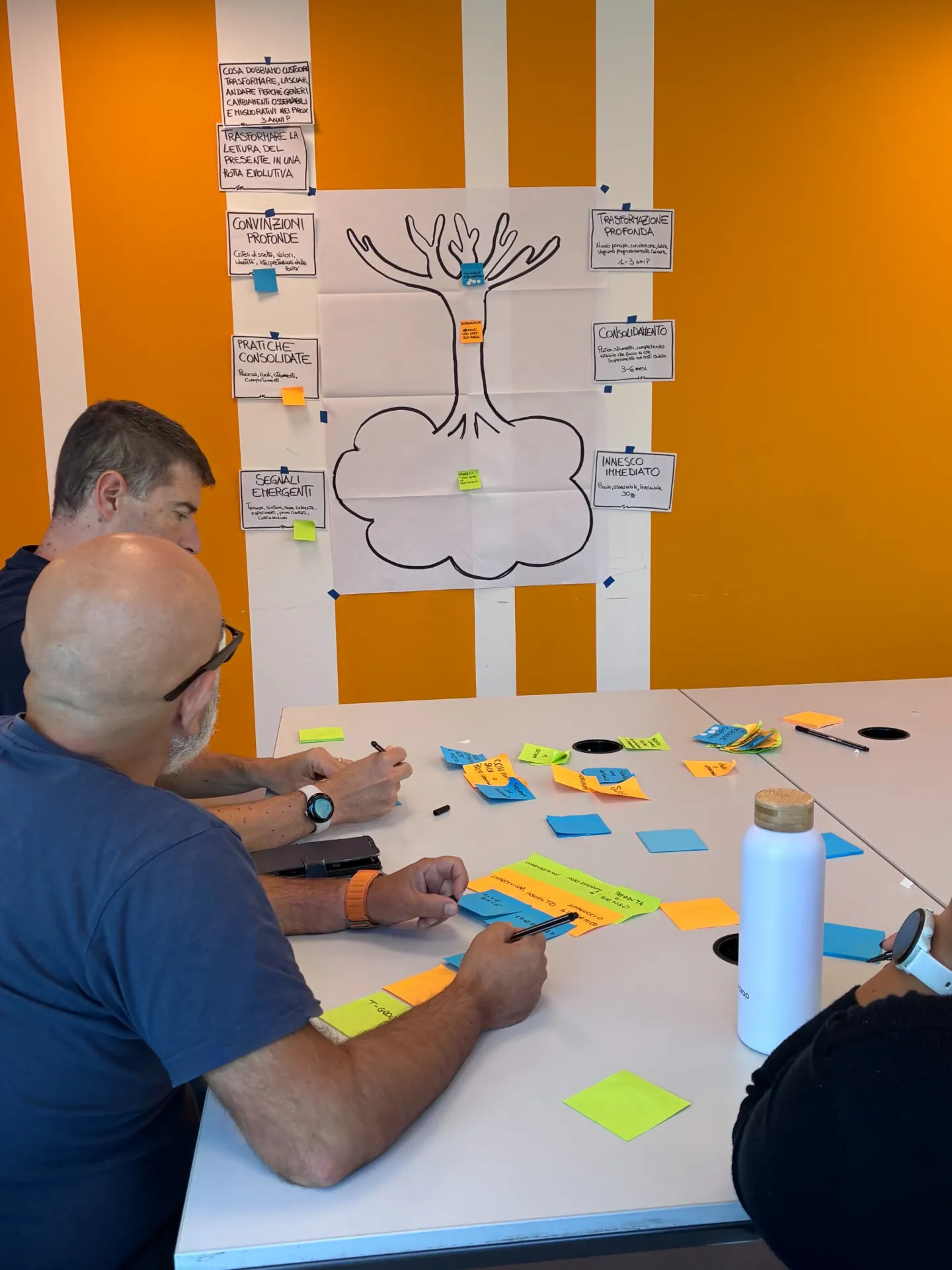
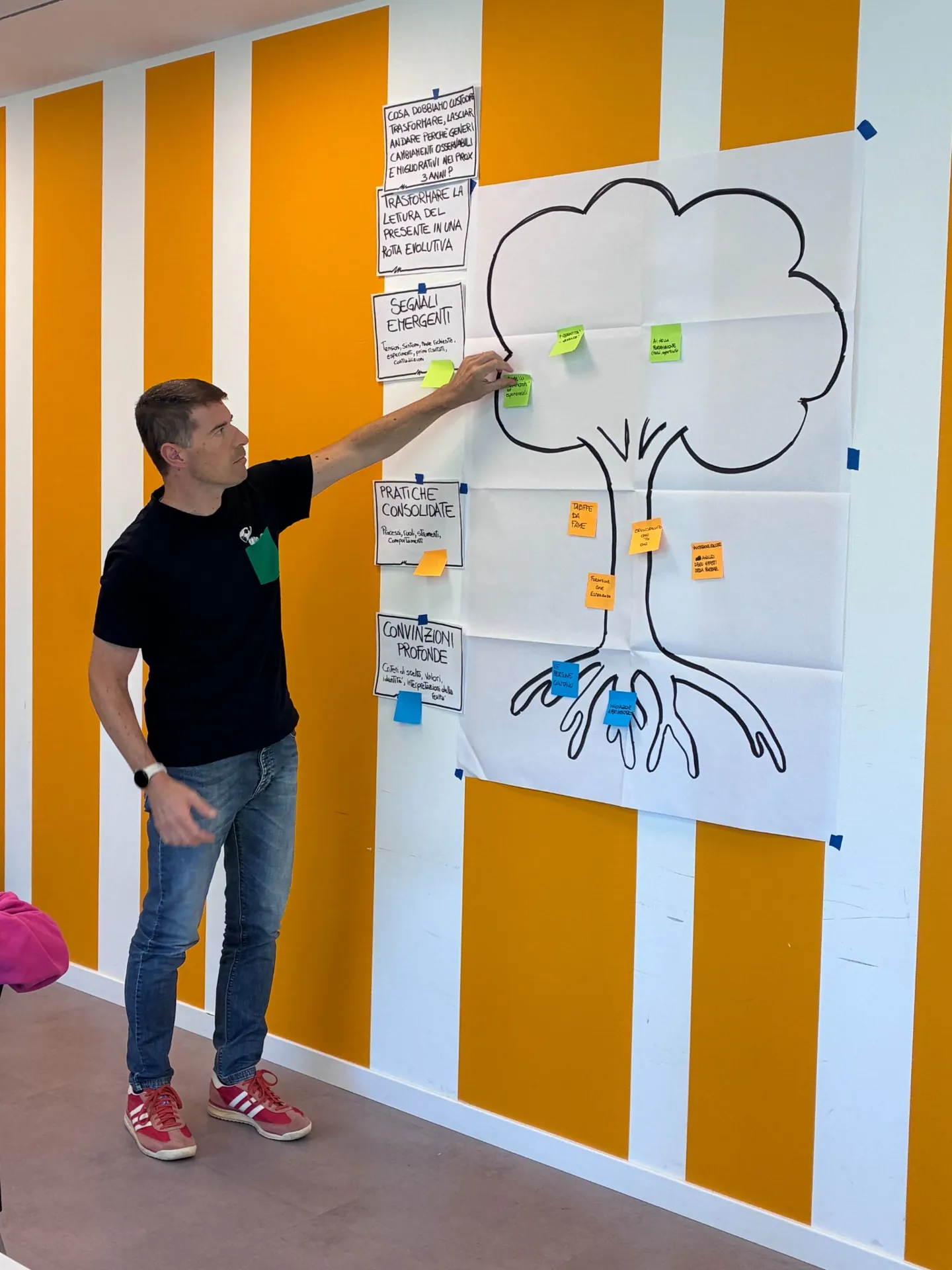
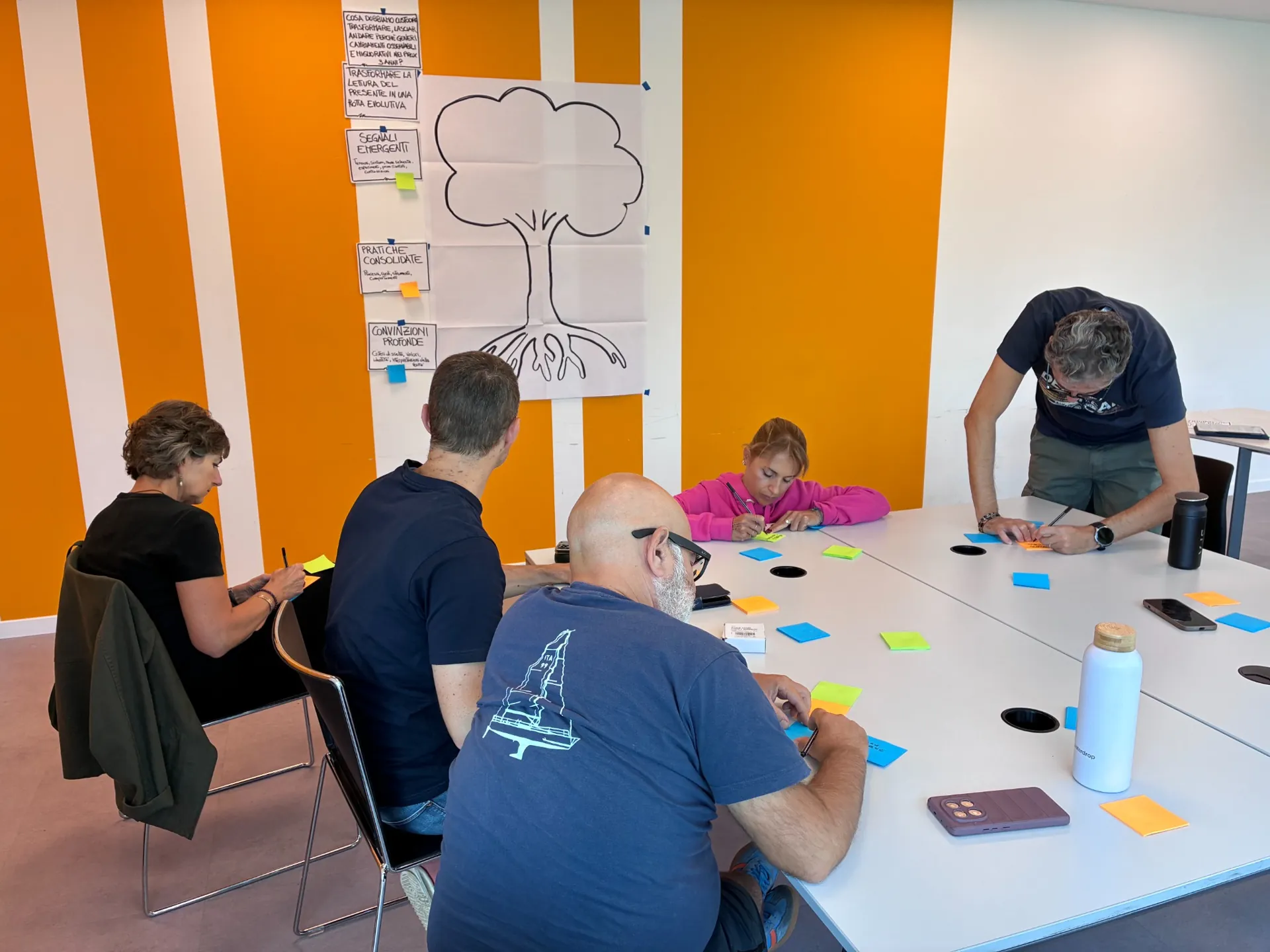
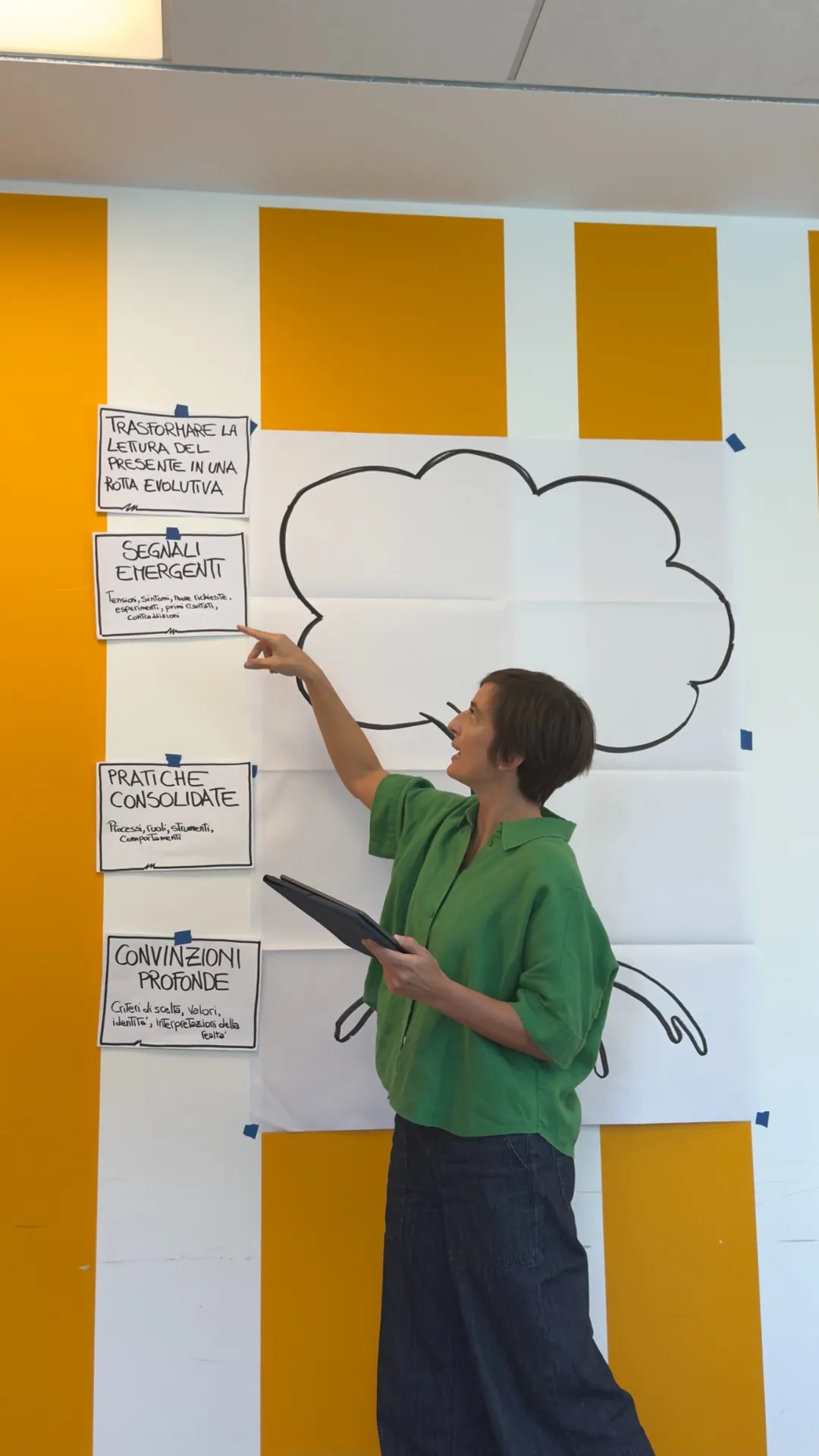
Exploring the roots: the beliefs, values and underlying ideas that continue to shape choices
02
Recognising in the trunk the practices, processes and behaviours through which those beliefs take shape
03
Looking at the leaves: new needs, tensions, experiments and signs that something is already changing
04
Connecting the different levels to understand what continues to support the system, what limits its development and what possibilities are emerging
05
Identifying a significant tension to focus the work on
06
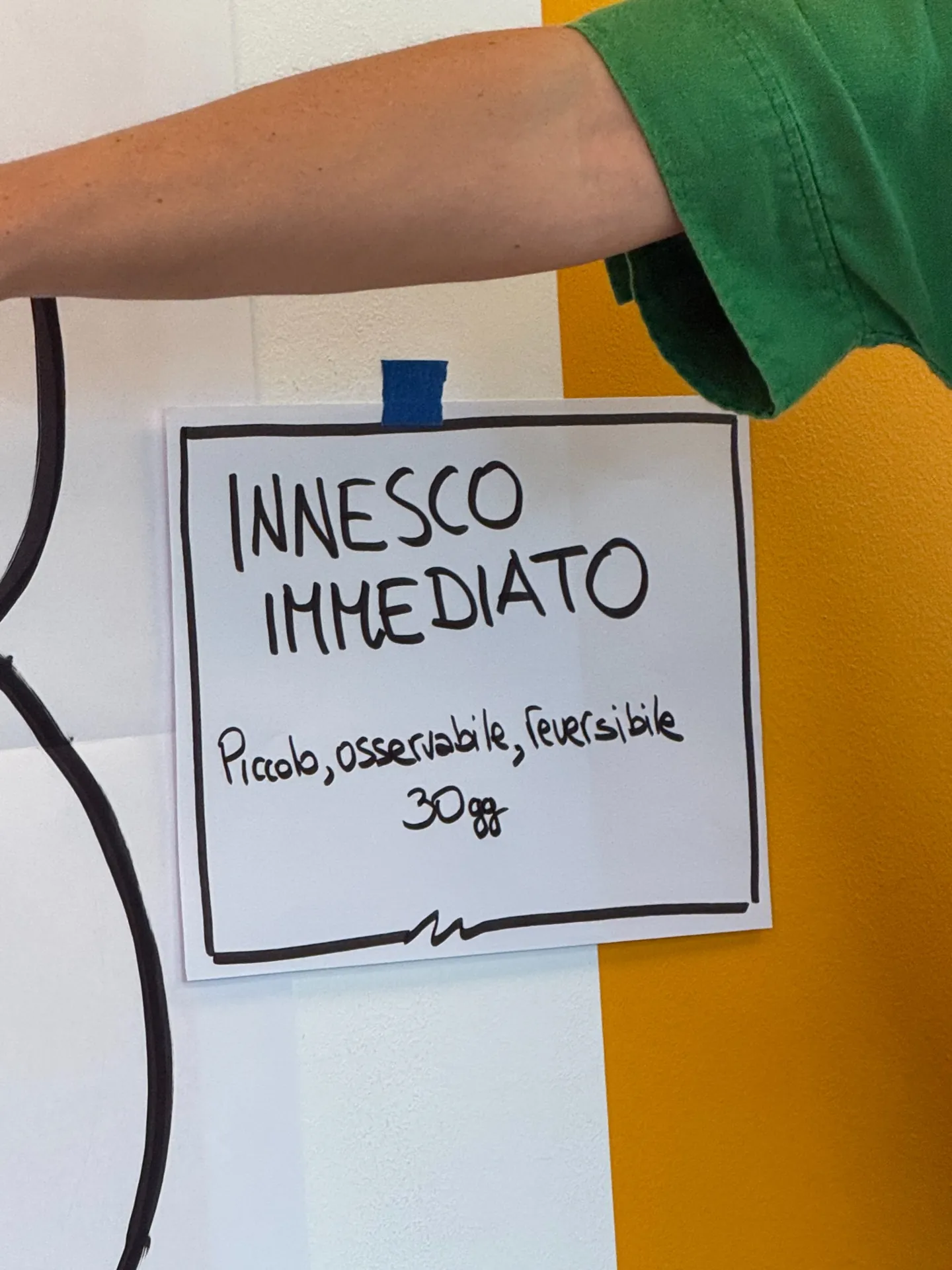
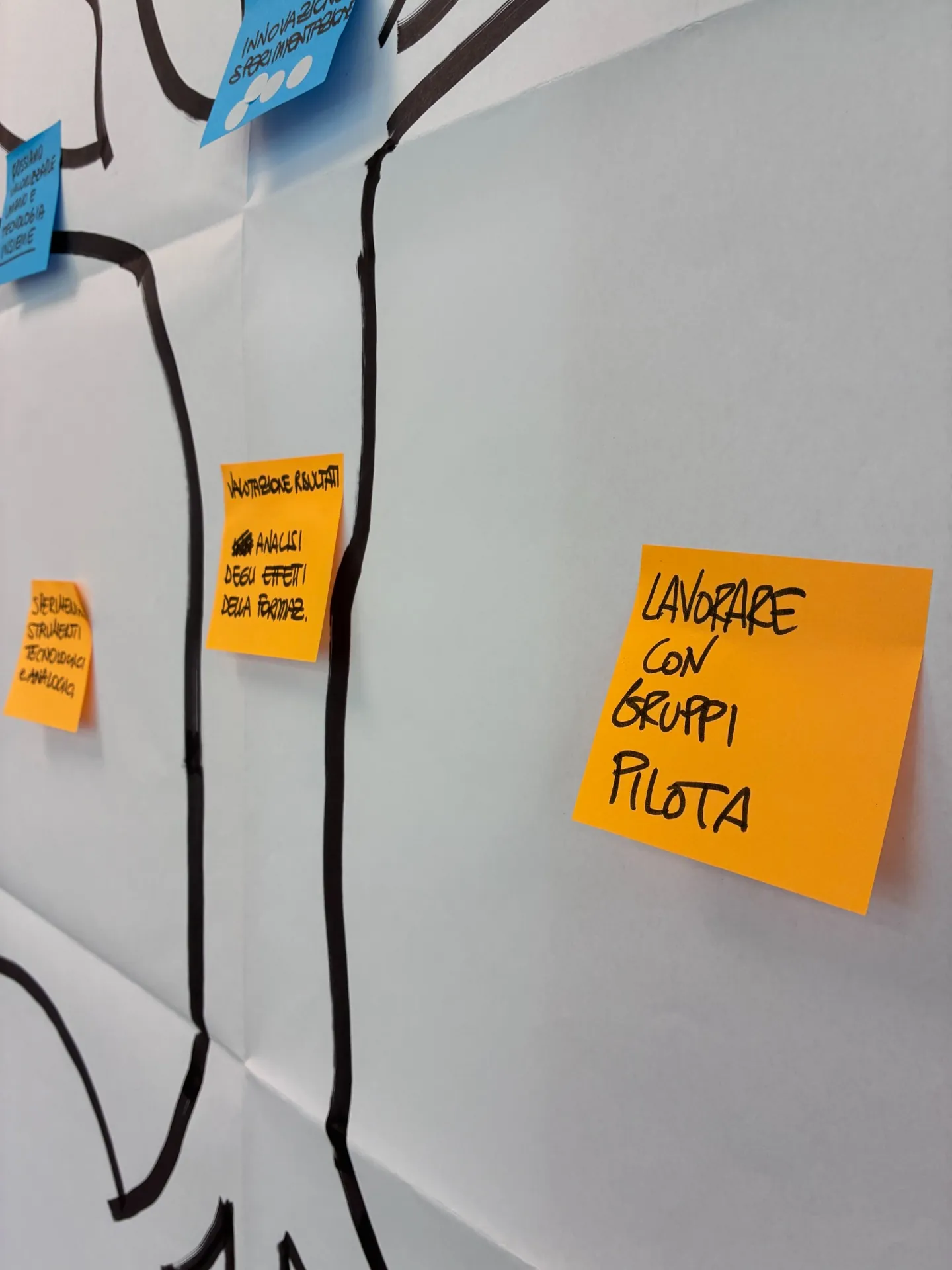
Turning the tree upside down to translate the reading of the present into an initial route: what to start shifting, what to strengthen and what deeper change to nurture over time
When can the ‘Roots and Routes’ process be used in a business?
When the stated direction no longer guides decisions
The vision is clear and objectives are defined, but day-to-day decisions are driven mainly by urgent demands. The context has changed, while some assumptions behind the priorities have never been explicitly reconsidered.
The workshop helps the group understand what is creating distance between the stated direction and the reality of work.
When what has worked becomes a constraint
Processes, roles and habits have delivered results for a long time. Today, however, exceptions are increasing, lead times are growing and it takes more effort and more workarounds to achieve the same results.
The workshop helps distinguish what still has value from what is being kept mainly because ‘we’ve always done it this way’.
When the future is already here, but remains at the margins
New ways of collaborating, unexpected customer needs, different skills or promising practices may already be emerging in some teams. Yet they remain isolated initiatives, go largely unnoticed and depend on the commitment of a few people.
The workshop helps identify these signs and connect them to a possible direction for the organisation’s development.
‘Roots and Routes’ can also support organisational, digital or cultural transformation, explore organisational identity, test a strategy or create an initial roadmap after a period of exploration and analysis.
From the workshop
Every intervention starts from a specific situation
The talks and workshops you have seen grew out of different contexts, objectives and groups. We can start with what is happening in your context and design an intervention that fits the people to involve and the change you want to make possible.